
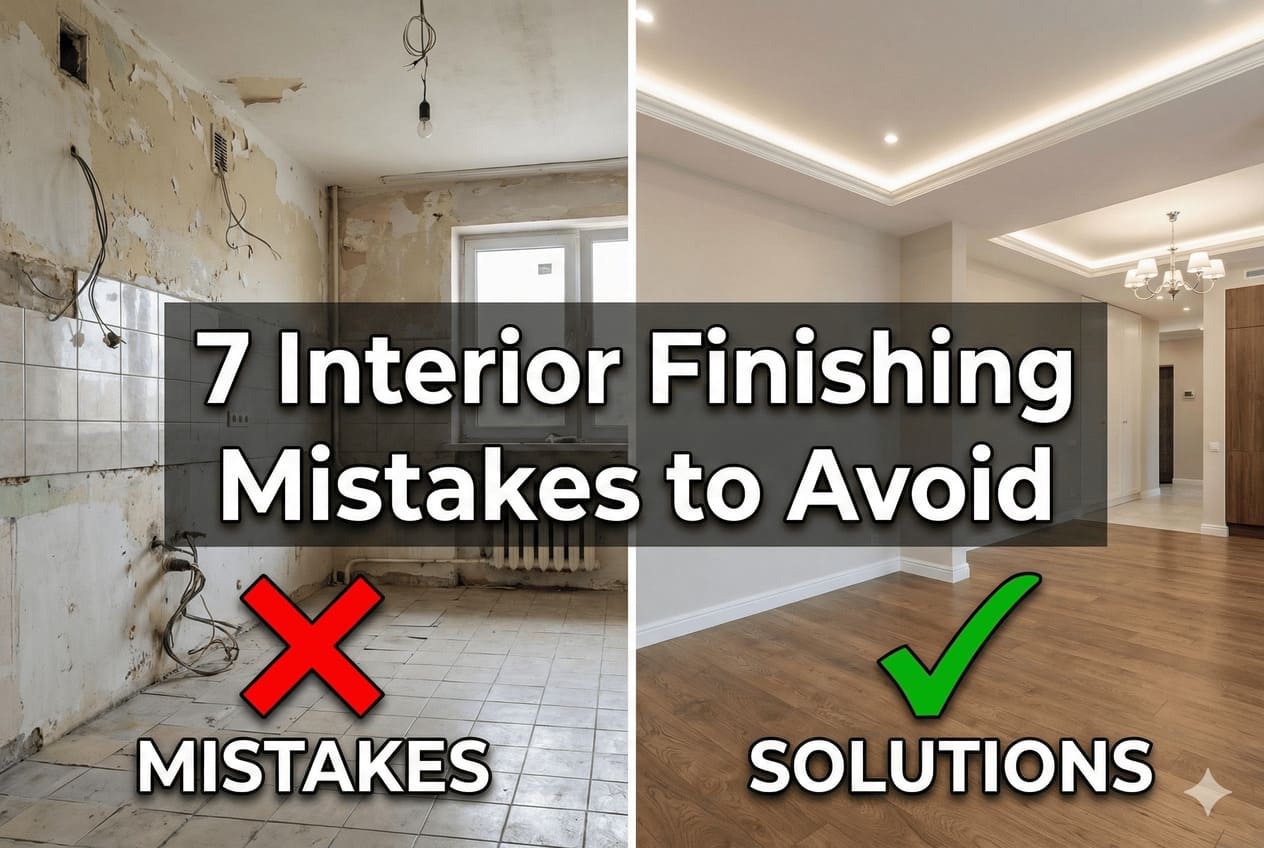
When you finally reach the interior finishing stage of your home or apartment, it feels like the exciting part has started. Colors, lights, flooring, and décor all come together to shape the atmosphere of your space. However, this is also the stage where many homeowners make costly mistakes that are difficult and expensive to fix later. Understanding these common errors will help you plan better and create a home that feels comfortable, stylish, and durable.
In this article, we will walk through seven of the most frequent interior finishing mistakes and show you how to avoid them in your next project.
1. Ignoring a Clear Plan and Budget
One of the biggest mistakes is starting the finishing work without a clear plan and realistic budget. Many people choose materials and designs as they go, which leads to confusion, delays, and overspending.
Instead, work with your finishing company to create a detailed plan that covers:
- Flooring types and quantities
- Paint colors and finishes
- Lighting layout and fixtures
- Doors, skirting, and cornices
- Electrical and plumbing points
- A clear plan helps keep the project on track and prevents unpleasant financial surprises.
2. Choosing Cheap Materials Over Quality
It is tempting to save money by choosing cheaper materials, especially when you have a tight budget. However, low-quality tiles, paint, or doors will quickly show wear and tear, forcing you to repair or replace them sooner than expected.
Investing in quality materials in key areas, such as flooring, bathroom fixtures, and kitchen finishes, is always a smarter choice. Durable materials:
- Last longer
- Look better over time
- Increase the value of your property
- You do not have to choose the most expensive options, but avoid the cheapest ones just to cut costs.
3. Poor Lighting Design
Lighting is one of the most important elements in interior finishing, yet it is often treated as an afterthought. Many homeowners rely only on a single ceiling light in each room, which creates a flat and uncomfortable atmosphere.
A good lighting plan usually includes three levels:
- Ambient lighting: general light that fills the room
- Task lighting: focused light for reading, cooking, or working
- Accent lighting: decorative light to highlight artwork or architectural details
- Combine spotlights, wall lights, floor lamps, and pendant lights to create a warm and flexible environment. Always consider the function of each room when planning your lighting.
4. Ignoring Function in Favor of Style
Beautiful finishes are important, but they should never come at the expense of practicality. Some people choose glossy floors that are slippery, or delicate materials in high-traffic areas that easily get scratched.
Before choosing any material or design, ask yourself:
- Is it easy to clean?
- Is it safe for children or elderly people?
- Will it handle daily use in this room?
- Your finishing company can guide you toward options that look stylish but are also functional and durable.
5. Using the Wrong Colors for the Space
Color has a powerful effect on how a space feels. Dark colors can make small rooms feel even smaller, while very bright colors can be tiring if used on every wall. Another mistake is choosing colors without testing them in the actual lighting of your home.
To avoid this:
- Use light, neutral colors in small or low-light rooms
- Add bold colors in small areas or as accent walls
- Always test paint samples on the wall and look at them at different times of the day
- This will help you create a balanced and comfortable color palette.
6. Overcrowding the Space with Details
Feature walls, decorative ceilings, patterned tiles, and bold lighting can all look great but not all at once. Overcrowding the design with too many strong elements makes the space feel busy and chaotic.
Instead, choose one or two main features in each room. For example:
- A feature wall with textured paint
- A unique chandelier in the living room
- Patterned tiles only in the shower area
- A clean, simple design usually looks more elegant and timeless.
7. Not Trusting Professionals
Finally, a common mistake is trying to manage everything alone or hiring unqualified workers just to save money. Poor workmanship can ruin even the best materials and designs.
Working with a professional finishing company gives you:
- Expert advice on materials and design
- A clear schedule and budget
- Skilled workers who know how to execute details correctly
- Good professionals listen to your needs, explain options clearly, and help you avoid costly errors.
Conclusion
Interior finishing is your chance to turn a building into a real home. By avoiding these seven common mistakes lack of planning, cheap materials, poor lighting, ignoring function, wrong colors, overcrowded designs, and weak workmanship you protect your investment and create a space you will enjoy for years.
Partnering with the right finishing company ensures every detail works together beautifully, from floors to ceiling, so your home feels both stylish and practical.

No comment